
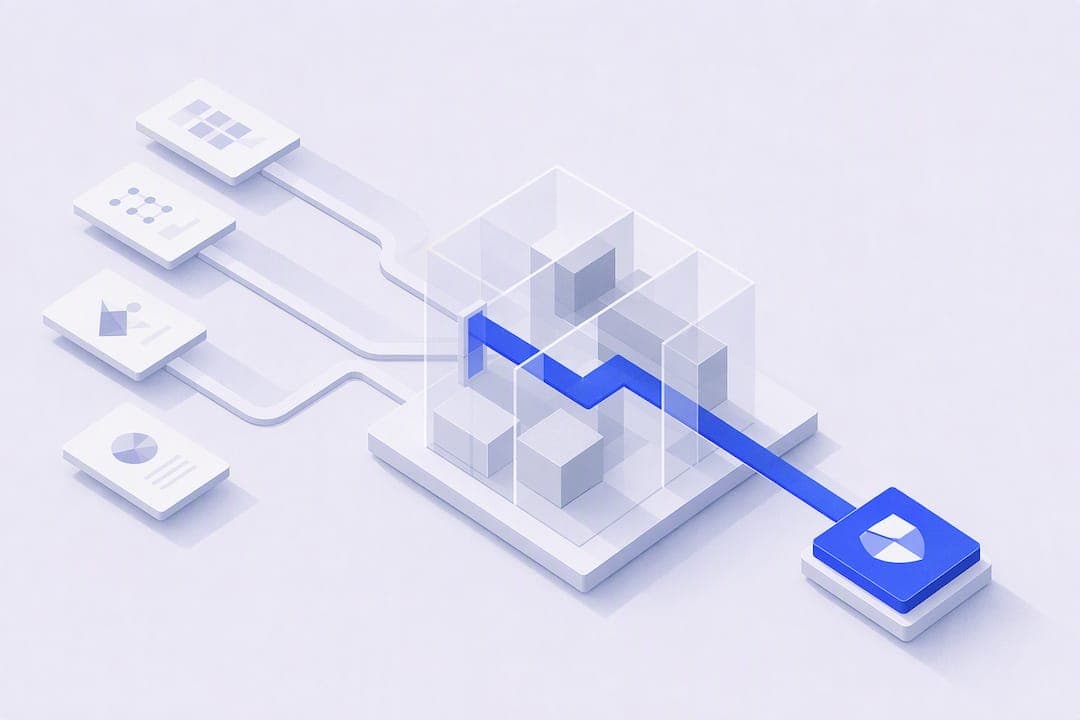
SaaS data security means protecting the data your organization stores in cloud applications, plus the access and integrations that touch it, since the provider secures the infrastructure, but you own everything that happens inside your tenant. The single highest-priority move: inventory the vital 20% of apps holding your crown-jewel data and lock down least privilege there first. Continuous monitoring, not a quarterly audit, is now the baseline for keeping that posture intact.
TL;DR:
- Prioritize securing the 20% of SaaS apps that contain your most sensitive data and enforce least privilege access for those first.
- Implement continuous monitoring to detect permission drift, stale admin accounts, and unapproved app integrations within hours instead of months.
- Assign clear ownership and responsibility for each SaaS application, and require formal security reviews before onboarding new tools to close the internal ownership gap.
- Use technical controls such as SSO, MFA, tenant configuration scans, encryption, and scoped API tokens to mitigate common SaaS risks.
- Deploy live dashboards that automatically connect to your SaaS data sources to provide real-time visibility into risk indicators without needing a dedicated data engineering team.
Table of Contents
- Common SaaS Data Security Risks and Real-World Failure Modes
- Shared Responsibility and Ownership: Who Must Do What for Secure SaaS
- Core Technical Controls for Protecting SaaS Data
- Practical 90-Day Implementation Checklist: Prioritize, Detect, and Remediate
- Where SaaS Telemetry Belongs in Your Security Stack
- How Live Dashboards Close the SaaS Visibility Gap
- Data Classification and Sensitivity Assessment for SaaS-Stored Data
- Incident Response Specific to SaaS Data Breaches
- Vendor Risk Management and Evaluating SaaS Provider Security Controls
- Compliance Requirements Specific to SaaS Environments
- Security as Continuous Operations, Not a Checklist
- See Your SaaS Data Exposure Without Hiring a Data Team
- Where This Guide's Numbers Come From
- Sources
- FAQ
Common SaaS Data Security Risks and Real-World Failure Modes
Most SaaS breaches don't start with a sophisticated exploit. They start with a setting nobody remembered to change.
Misconfigurations are the most common entry point. A shared drive folder set to "anyone with the link," a Slack channel exported to a public webhook, a CRM report shared externally and forgotten. These sit quietly until someone stumbles on them, or a scanner does.
Permission drift compounds the problem over time. An employee gets admin rights for a one-off project, moves teams, and keeps the access for years. Multiply that across hundreds of SaaS accounts and you get a mess of stale privileges nobody can fully map. Identity governance is now considered the leading cloud risk category due to accumulation effect.
Shadow SaaS adds another layer. Marketing signs up for an analytics tool with a corporate email, connects it to your customer database, and IT never finds out until a vendor risk review or, worse, a breach notification.
APIs and tokens carry their own exposure. Over-scoped tokens, keys committed to a public repository, or integrations that never expire create long-lived backdoors.
Watch for these indicators in your logs and access reviews:
- Spikes in file-sharing link creation, especially external or "anyone" links
- Accounts with admin-level roles that haven't logged in for 60+ days
- New OAuth grants to apps not on an approved list
- API tokens with broad scopes that haven't rotated in over a year
- Login attempts from unmanaged devices or unexpected geographies
Shared Responsibility and Ownership: Who Must Do What for Secure SaaS
SaaS security splits cleanly on paper and messily in practice. The provider secures the infrastructure, the platform, and the application code. You secure the data, the access, and every integration you connect to it. That's the tenant side, and it's where nearly every avoidable breach originates.
NIST's guidance on public cloud security draws this line explicitly: tenant-side responsibilities remain with the consumer, including data classification, access control, encryption choices, and exit rights when a contract ends. The framework recommends continuous monitoring and negotiated agreements rather than a one-time review at signing.
The real-world gap shows up between business units and security teams. A department buys and configures a SaaS tool independently, security never gets visibility, and nobody owns the configuration once it's live. That gap is exactly why 75% of organizations reported a SaaS-related security incident in the past year, while 91% still rated their posture as secure. Confidence and reality are running in opposite directions.
Close the gap with four governance moves:
- Assign a named business owner and a named security contact for every SaaS app in use, not just the top ten.
- Negotiate SLAs that specify breach notification windows, data return formats, and encryption standards in writing.
- Require every new SaaS purchase to pass through a lightweight security review before data flows in.
- Review ownership assignments quarterly, since app owners change teams more often than the inventory gets updated.
Core Technical Controls for Protecting SaaS Data
Once ownership is clear, the controls that actually reduce risk fall into six categories.
Identity comes first because it's the biggest lever you have. Enforce single sign-on everywhere it's supported, require phishing-resistant multifactor authentication, and automate the joiner-mover-leaver lifecycle so offboarding revokes access the same day, not the same quarter. Design roles around least privilege from the start rather than trying to claw back over-provisioned access later.
SaaS security posture management (SSPM) tools scan your tenant configurations continuously, flagging things like public sharing settings, dormant admin accounts, and risky third-party app connections that native vendor dashboards typically don't surface, since those dashboards focus on platform uptime, not your tenant's risk posture.
Data protection means encryption at rest and in transit as a floor, not a differentiator. Cloud data protection reviews consistently recommend TLS for data in motion and strong encryption at rest, paired with proper key management rather than relying on default provider settings alone.
DLP for SaaS works best when scoped to specific data types, like customer records or financial fields, rather than trying to inspect every file. Broad content inspection across every app generates alert fatigue fast.
API security deserves particular attention. Scope tokens tightly, rotate them on a schedule, and require an approval step before any new integration gets a live connection. The OWASP Session Management Cheat Sheet lays out practical token handling and session controls that apply directly to SaaS integrations.
Logging ties it together. Send configuration changes, permission grants, and authentication events to your SIEM, not just to the SaaS vendor's own console.
- SSO and MFA across every business-critical app
- Automated lifecycle management tied to your HR system
- SSPM scanning for configuration drift
- Encryption with centralized key management
- Scoped, rotated API tokens with approval workflows
- Centralized logging feeding SIEM/SOAR
Pro Tip: Treat AI agents and service accounts as identities, not infrastructure. They need the same lifecycle reviews and least-privilege limits as a human employee, and they're far easier to forget about.
Practical 90-Day Implementation Checklist: Prioritize, Detect, and Remediate
You don't need a year-long program to materially cut SaaS risk. A focused 90 days gets you most of the way there.
- Weeks 1 to 2: Inventory every SaaS app in use, including shadow apps discovered through browser or network logs, and tag the vital 20% holding your most sensitive data. Practitioner guidance backs this prioritization: that smaller set typically accounts for the majority of your actual exposure.
- Weeks 3 to 5: Enforce least privilege on those priority apps and remove dormant accounts that haven't authenticated in 60 days or more.
- Weeks 6 to 8: Stream configuration and identity telemetry from those apps into your monitoring stack, and set alerts for permission drift.
- Weeks 9 to 11: Roll out automated policy enforcement, whether that's an SSPM tool or policy-as-code rules, so drift gets flagged without a manual review cycle.
- Weeks 12 to 13: Lock down integration workflows so any new app connection requires security sign-off before it goes live.
Pro Tip: Start with 5 to 10 mission-critical apps rather than trying to cover your entire SaaS footprint at once. A focused pilot that automates least-privilege checks and measures drift weekly builds a repeatable process you can scale later, instead of stalling on scope.
Where SaaS Telemetry Belongs in Your Security Stack
SaaS signals only matter if they land somewhere someone actually watches. Configuration and identity events belong in your SIEM alongside network and endpoint data, so correlation rules can catch patterns a single tool would miss. SSPM dashboards are better suited to day-to-day configuration hygiene, like flagging a new public share or an unapproved integration, while your SIEM handles cross-system correlation and alerting.
SOAR playbooks earn their keep on the recurring incident types: automatic ticket creation and access suspension when permission drift crosses a threshold, forced token revocation on suspected OAuth compromise, and automated notification when a sensitive file gets an external share link.
Change-control matters just as much as detection. Requiring approval before any new integration connects to core business data cuts off a large share of shadow SaaS risk before it starts.
- Route configuration and identity events to SIEM for correlation
- Use SSPM for daily configuration hygiene checks
- Build SOAR playbooks for drift, OAuth compromise, and file exposure
- Run quarterly tabletop exercises simulating a SaaS breach
- Conduct post-incident reviews and feed findings back into policy
Operational teams that properly instrument this pipeline report cutting mean time to detect permission drift from months to hours, a gap most periodic audit cycles never close.
How Live Dashboards Close the SaaS Visibility Gap
Security teams without a dedicated data engineering group still need to see drift as it happens, not weeks later. A live dashboard platform can connect to your SaaS data sources and build live dashboards automatically, translating raw access logs and configuration data into views app owners can actually read. The code stays editable and traceable, so security can verify exactly how a metric gets calculated. Dashboards like this complement SSPM and SIEM tooling; they don't replace the enforcement engines that actually revoke access or block a risky integration.
Data Classification and Sensitivity Assessment for SaaS-Stored Data
You can't apply least privilege intelligently if you don't know which data is actually sensitive. Classification should happen at the point of ingestion into a SaaS app, not as an afterthought during an audit.
A workable structure has three or four tiers: public, internal, confidential, and regulated (covering anything touching health records, payment data, or personal information under privacy law). Each tier carries its own handling rules for sharing, retention, and who can grant external access.
The practical challenge is that SaaS data lives fragmented across dozens of tools. Customer records sit in a CRM, support tickets in a helpdesk platform, financial data in an accounting tool, and each has its own sharing model and default settings. Sensitivity assessment means walking through each app and asking what data type it holds, who can currently access it, and whether that access matches the classification tier.
Automate this where you can. Manual classification reviews fall out of date the moment someone uploads a new spreadsheet. Tagging sensitive fields at the schema level, where the SaaS platform allows it, keeps the classification attached to the data rather than to a point-in-time review that expires the day after you finish it.
Incident Response Specific to SaaS Data Breaches
SaaS incidents move differently than on-premises breaches, and your response plan needs to reflect that. You often don't control the underlying infrastructure, which means containment depends on provider cooperation, API-based access revocation, and your own ability to isolate the affected tenant configuration quickly.
A SaaS-specific response plan needs four elements your general incident response plan probably doesn't spell out clearly enough. First, pre-authorized emergency contacts at each critical SaaS vendor, so you're not searching for a support line during an active incident. Second, a documented process for revoking OAuth tokens and API keys across every connected integration, not just the primary account. Third, clear log retention agreements with vendors, since some SaaS platforms purge audit logs faster than your investigation timeline allows. Fourth, a communication plan for notifying affected business units and, where required, regulators within the timeframes your contracts and applicable law specify.
Practice this before you need it. A tabletop exercise that simulates a compromised OAuth token connected to your finance SaaS platform reveals gaps in authority and speed that a written plan alone never surfaces. Who can actually pull the trigger on revoking access at 2 a.m., and do they have the permissions to do it without waiting for approval?
Vendor Risk Management and Evaluating SaaS Provider Security Controls
Every SaaS vendor you onboard inherits a slice of your risk surface, so vendor evaluation has to go beyond a sales call and a signed contract.
Start with the provider's own certifications and audit reports. SOC 2 Type II reports and ISO 27001 certifications indicate a vendor has undergone independent review of their controls, though you should still read the report scope rather than take the badge at face value. Ask specifically what's covered and what's excluded.
Push on data handling questions directly: where is data stored geographically, is it encrypted at rest and in transit, who at the vendor can access customer data, and what's the process and timeline for data deletion when you terminate the contract. Vague answers on any of these are a warning sign.
Negotiate contractual terms, not just technical ones. Breach notification windows, audit rights, and data portability guarantees belong in the contract, not in a verbal assurance from a sales engineer. This is also where a clear internal ownership model pays off, since knowing who owns each vendor relationship makes ongoing risk reviews far easier to schedule and enforce; tools built around tenant control and catalog management can help IT teams keep that ownership visible across a growing app portfolio.
Reassess annually at minimum, and immediately after any public disclosure of a vendor security incident.
Compliance Requirements Specific to SaaS Environments
Compliance in a SaaS context is harder than in a traditional data center because you're relying on a third party to implement controls you're still accountable for.
Under GDPR, if your SaaS vendor processes personal data of EU residents, you're typically the data controller and the vendor is the processor, which means you need a data processing agreement in place and you remain liable for how that data gets handled, even though you don't control the vendor's infrastructure. Cross-border data transfer mechanisms matter here too, particularly if the vendor stores or processes data outside the EU/EEA.
HIPAA works similarly for healthcare data. If a SaaS vendor touches protected health information, you need a signed Business Associate Agreement before any data flows, and you're expected to verify the vendor's safeguards meet HIPAA's security rule requirements, not just assume compliance because they claim it in marketing copy.
Other frameworks, like SOC 2 for service organizations or PCI DSS for payment data, layer additional requirements depending on what your SaaS apps handle. The common thread across all of them: compliance obligations don't transfer to the vendor just because the data lives in their infrastructure. Map every SaaS app against the regulations that apply to the data type it stores, and treat that mapping as a living document that gets updated every time you onboard a new tool.

Security as Continuous Operations, Not a Checklist
The ownership gap between business units and security teams is the real vulnerability, not any single misconfiguration. Fixing it means measuring the right things: permission drift rate, time to revoke access, and percent of crown-jewel apps actually inventoried. Automation and named business-owner accountability close that gap faster than another audit ever will.
— Ąžuolas
See Your SaaS Data Exposure Without Hiring a Data Team
Most of the visibility gap this guide describes comes down to one thing: teams can't act on drift they can't see in real time. Such solutions close that gap by connecting directly to your SaaS data sources and building live dashboards automatically, no data engineer required. You describe what you want to track, whether it's dormant admin accounts, external sharing spikes, or app inventory by sensitivity tier, and the platform handles the ingestion, modeling, and visualization behind it.
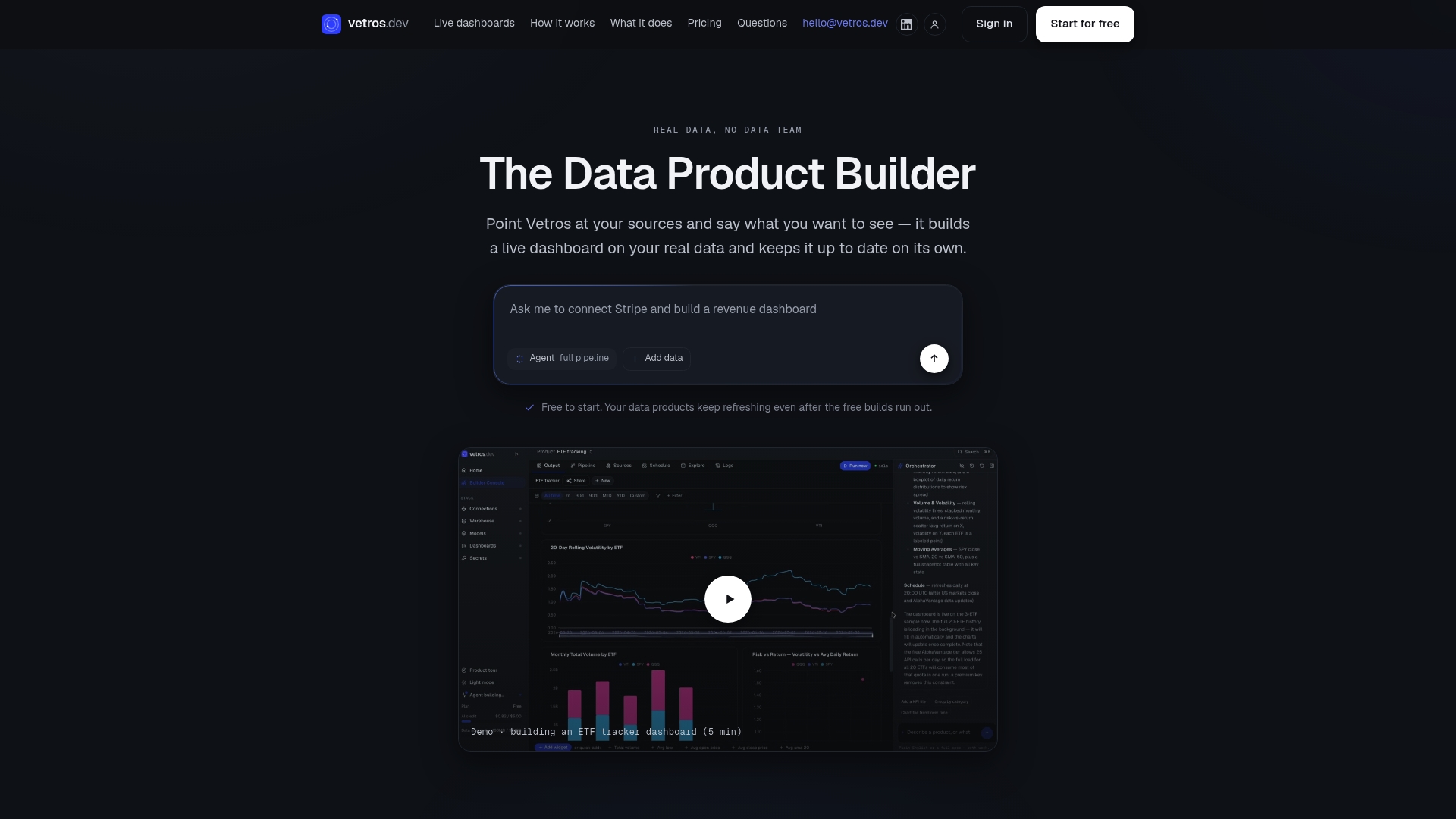
Dashboards stay editable and traceable, so security teams can verify exactly how a number gets calculated instead of trusting a black box. Data can stay encrypted within the user's cloud environment throughout. If your team is stretched thin and still needs continuous visibility into SaaS risk indicators, start a free trial and build your first dashboard today, or check the Pro and Team plans for ongoing monitoring at scale.
Where This Guide's Numbers Come From
The claims here draw on the State of SaaS Security Report 2025, NIST SP 800-144 on cloud shared responsibility, and CSA/AppOmni analysis on why visibility alone doesn't equal security.
Sources
- State of SaaS Security Report 2025
- NIST Special Publication 800-144: Guidelines on Security and Privacy in Public Cloud Computing
- OWASP Session Management Cheat Sheet
FAQ
What Is SaaS Data Security?
SaaS data security is the practice of protecting data stored in cloud software applications, along with the access controls and integrations connected to it. The provider secures the underlying platform, while your organization owns data classification, access management, and integration security.
How Is SaaS Security Different From IaaS or PaaS Security?
In SaaS, the vendor manages the application and infrastructure entirely, leaving you responsible mainly for data, access, and configuration. In IaaS and PaaS, you take on more responsibility for the operating system, network, or runtime layers, shifting the shared responsibility line further toward you.
What's the Fastest Way to Reduce SaaS Risk?
Inventory the small set of apps holding your most sensitive data and enforce least privilege there first, since that vital 20% typically carries the majority of real exposure. Layer in continuous monitoring after that so drift gets caught in hours, not months.
Does an SSPM Tool Replace SIEM or SOAR?
No. SSPM handles day-to-day SaaS configuration hygiene, flagging things like public sharing settings or risky app connections, while SIEM and SOAR handle cross-system correlation and automated response. They work best layered together, not as substitutes for each other.
Can a Dashboard Tool Help With SaaS Security Visibility?
A live dashboard platform like Vetros can turn SaaS telemetry, such as access logs or app inventory data, into readable, continuously updated views for security and business teams. It complements enforcement tools like SSPM and SIEM rather than replacing them, since it doesn't itself revoke access or block integrations.